
Neighborhood · Liberty Hill
Orchard Ridge: buying on Liberty Hill's rolling terrain
Preserved trees and genuine elevation change set Orchard Ridge apart from Liberty Hill's flatter subdivisions. Here, lot selection changes the house — and the drainage and grading questions deserve real attention.
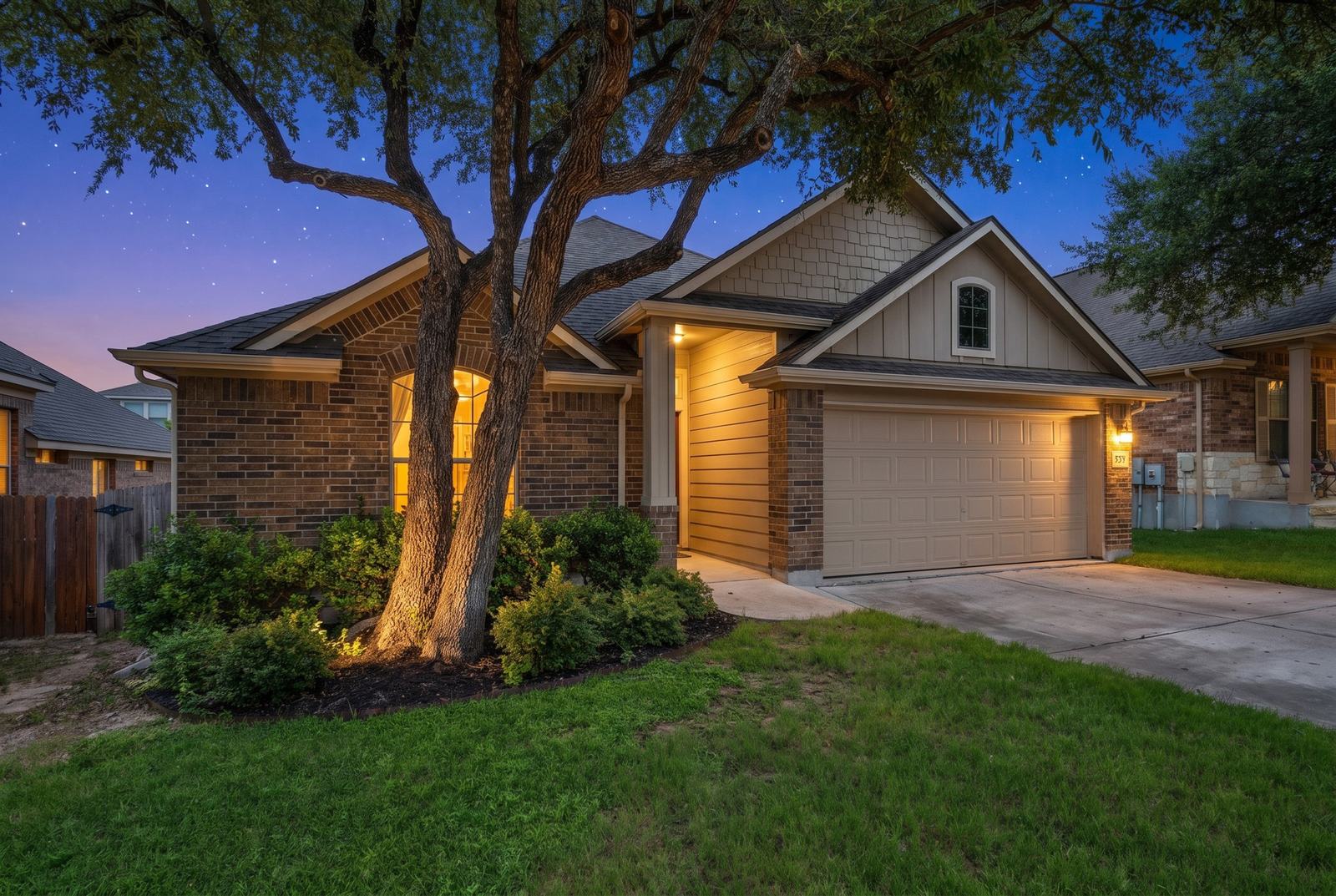
Orchard Ridge stands out among Liberty Hill's neighborhoods for its terrain: real elevation change from lot to lot, mature trees that several builders have made a point of preserving rather than clearing, and a resulting streetscape that looks less uniform than a flat, graded subdivision.
That character is a draw for buyers who want more visual interest and shade than a newly cleared lot typically offers. It also means that in Orchard Ridge, more than in most nearby communities, the specific lot drives the design of the home — how a builder sites the structure, where the driveway grade lands, and how water moves around the foundation are all lot-specific decisions rather than a repeated template.
Lori has walked plenty of Orchard Ridge lots with buyers and can help you read a site plan honestly before you fall for a rendering.
Looking at Orchard Ridge?
Tell Lori which lot or section you're considering and she'll help you think through the terrain questions before you tour.
Terrain
Rolling lots and preserved tree cover
Where many newer Liberty Hill subdivisions clear and grade lots to a fairly uniform slope, Orchard Ridge sections often retain more of the site's natural contour and a meaningful share of existing trees. That's part of the appeal — mature shade and a less uniform streetscape — but it also means lots within the same section can vary considerably in slope, orientation and buildable footprint.
Before choosing a lot, walk it in person at different times of day if you can, and ask the builder or listing agent to point out the specific building envelope, any tree-preservation zones, and where the highest and lowest points of the lot sit relative to the planned or existing structure.
Drainage & grading
Why grading is a real due-diligence item here
On rolling terrain, drainage doesn't happen by accident — it's engineered. Ask for documentation rather than assuming a lot drains well because it looks fine on a dry day.
- Ask for the site's grading and drainage plan, and where applicable, ask whether a civil engineer or the builder's engineer of record reviewed the specific lot.
- Identify any drainage easements crossing the lot and understand what they restrict — fencing, structures, and landscaping are commonly limited within them.
- For resale homes, ask the seller about any known drainage issues, past standing water, or retaining-wall repairs, and consider a specialist inspection if anything looks uncertain.
- Retaining walls: ask who built them, whether they were permitted, and whether there's any warranty or engineering documentation available.
Trees
Tree preservation rules and what they mean for you
Some lots in Orchard Ridge carry tree-preservation requirements tied to the community's plan or the municipality's ordinances, which can restrict removing or significantly trimming certain trees, especially larger, protected specimens. This can affect everything from where a pool can go to how much sunlight reaches a planned garden.
If a specific tree matters to your plans for the lot — for shade, for privacy, or because you'd want it removed — ask about its protected status and any required permitting before you assume either outcome.
Builders
Multiple builders, one set of terrain rules
Orchard Ridge has drawn more than one builder, each working within the same general terrain constraints but with its own floor plans, foundation approaches and standard finishes. A plan that works cleanly on a flatter lot elsewhere may require modification — a stepped foundation, added retaining structure, or adjusted garage entry — to fit a sloped lot here.
Ask each builder directly how their specific plan is adapted for the lot you're considering, and review their standard specification sheet and warranty terms. Our guide on questions to ask a home builder is a useful companion for this conversation.
Due diligence
Before you commit to a lot or a resale home
- 1
Walk the specific lot
Look at slope, trees, and the location of the building envelope in person, not just on a plat map.
- 2
Request the grading and drainage plan
Ask the builder or seller for documentation, and consider a structural engineer's opinion for anything uncertain.
- 3
Confirm tree-preservation obligations
Find out which trees, if any, are protected and what that means for future landscaping or additions.
- 4
Compare builder standards for the same terrain
If choosing between builders, ask each one specifically how they adapt their plans to sloped lots here.
- 5
Get a full inspection, plus specialists where warranted
For resale homes, ask your inspector to pay particular attention to foundation, drainage and retaining structures.
Fit
Who tends to be comfortable here
Orchard Ridge tends to suit buyers who want mature tree cover and topographic variety over a flat, uniformly graded lot, and who are comfortable engaging with the drainage and grading due diligence that comes with it. Buyers who prioritize a flat, low-maintenance lot may be better matched to a different Liberty Hill section.
Good questions
Orchard Ridge: common questions
Keep exploring
More on Liberty Hill and Orchard Ridge
Community
Liberty Hill community overview
See how Orchard Ridge compares to Liberty Hill's other neighborhoods.
Explore Liberty HillRelocation
Moving to Liberty Hill
What to sort out before relocating to Liberty Hill from out of town.
Read the relocation guideNew construction
New construction in Liberty Hill
Builder rows, spec homes and what to ask before you sign a contract.
See what to askResource
Questions to ask a home builder
A working list for comparing builders' standards, terms and warranties.
Get the checklistResource
New-construction walkthrough checklist
What to look for on your final walkthrough before closing.
Get the checklistSibling neighborhood
Stonewall Ranch
A smaller-scale, established Liberty Hill subdivision.
Compare Stonewall RanchInformation about Orchard Ridge is general, subject to change and provided for education only. Grading, drainage, tree-preservation rules, builder specifications and site conditions must be verified for the specific lot or home with the builder, seller, association, engineer and county as applicable. Nothing here is legal, tax, lending, insurance, engineering or appraisal advice, and nothing here is a statement about school quality, safety, demographics or future property values.
Considering a specific lot in Orchard Ridge?
Call or text Lori and she'll help you read the site plan and line up the right specialists before you commit.